Why Northeast Ohio Homeowners Should Get Ahead of Peak Leaf Season
Fall in Northeast Ohio is beautiful.
It is also extremely good at filling gutters.
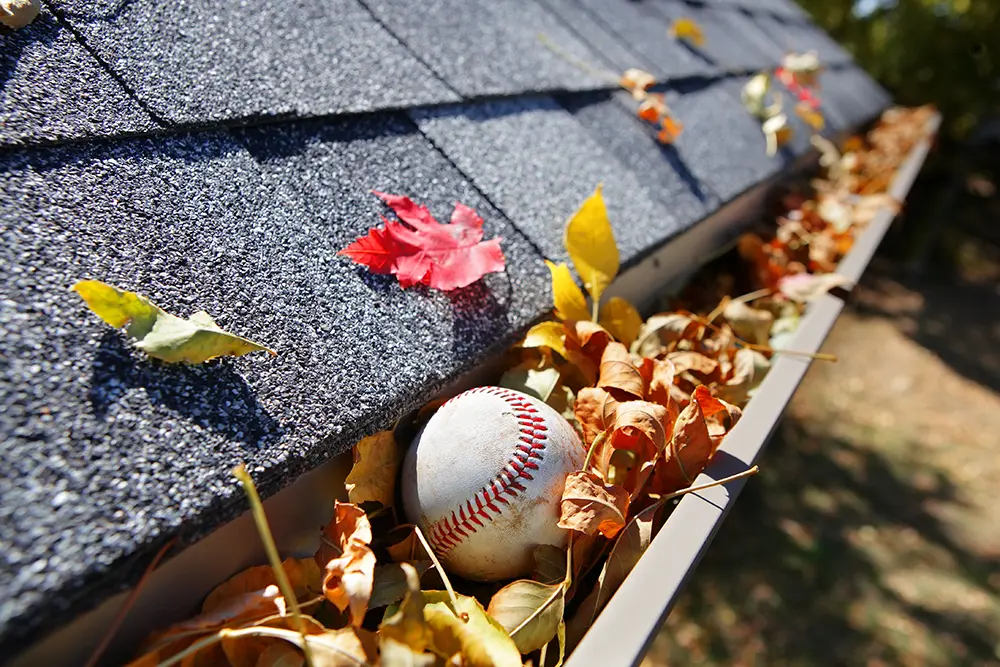
Maples, oaks, and other mature trees can drop an enormous amount of leaves in a short period of time. Add twigs, seed pods, shingle granules, and debris from summer storms, and a gutter that looked fine in August can be clogged by October.
That is why we recommend homeowners clean gutters before fall is fully underway rather than waiting until leaves are already piled up.
For homes across Cleveland, Akron, Canton, Medina, Hudson, Mentor, North Canton, Massillon, and surrounding Northeast Ohio communities, good gutter drainage is an important part of protecting the roof before colder weather arrives.
Gutters may seem separate from the roofing system, but when they stop moving water away from the home properly, roof problems can follow.
Why Gutters Matter to Your Roof
Your roof is designed to shed water.
Rain hits the shingles, flows downward, reaches the roof edge, and enters the gutters.
From there, the gutter system carries that water into downspouts and away from the home.
When that system is working properly, most homeowners never think about it.
When gutters clog, however, water no longer has a clear path.
Instead, it may:
- Overflow the gutter
- Pool near the roof edge
- Run behind gutters
- Soak fascia boards
- Spill next to the foundation
- Freeze during colder weather
A clogged gutter does not automatically mean you have roof damage, but it creates conditions you would rather avoid.
Local Tip: Homes surrounded by mature trees may need gutter cleaning more than once during fall. Different tree species drop leaves at different times, so a gutter cleaned in early September may need attention again later in the season.
Why You Should Clean Gutters Before Peak Leaf Drop
Waiting until every leaf has fallen sounds efficient.
Unfortunately, that can mean spending several weeks with badly clogged gutters during one of Northeast Ohio’s wetter seasons.
Fall rain still needs somewhere to go.
Cleaning before peak leaf drop gives you a chance to remove debris that may already be present from:
- Summer thunderstorms
- Tree pollen
- Seed pods
- Twigs
- Roofing granules
- Previous leaf buildup
Then you can monitor the gutters as autumn progresses.
This is especially useful if your home has large trees directly above or near the roof.
What Happens When Gutters Become Clogged?
Leaves themselves are not usually the main problem.
The issue is what happens when they block water.
Water Overflows the Gutter
Instead of entering the downspout, rainwater spills over the edge.
That can saturate landscaping, splash against siding, or collect close to the foundation.
Water Can Collect Near the Roof Edge
When water cannot drain properly, moisture may remain around the lower edge of the roofing system longer than intended.
If other roof-edge components are already damaged or deteriorated, that extra moisture can make existing problems worse.
Fascia and Trim Can Stay Wet
Gutters are typically attached near fascia boards.
Repeated overflow may expose those materials to excess moisture.
Over time, wood components can deteriorate if they remain wet.
Cold Weather Makes Drainage Problems More Complicated
Once Northeast Ohio starts experiencing freezing temperatures, standing water can become ice.
That adds weight to gutters and can create additional drainage problems.
The easiest time to deal with leaves is before frozen debris becomes part of the problem.
Clogged Gutters and Ice Dams Are Not the Same Thing
This is an important distinction.
Homeowners sometimes hear that clogged gutters “cause ice dams.”
That is an oversimplification.
Ice dams are primarily related to heat escaping into the attic, uneven roof temperatures, melting snow, and refreezing water near colder roof edges.
However, clogged gutters can make winter drainage around the roof edge worse.
If melting snow reaches a gutter already packed with frozen leaves and debris, water has fewer places to go.
So while cleaning gutters does not solve the underlying causes of ice dams, it is still an important part of winter roof preparation.
Check Your Downspouts Too
A gutter can look perfectly clean while the downspout below it is blocked.
Water should move freely through the entire system.
Common downspout problems include:
- Leaves lodged near the opening
- Twigs caught inside elbows
- Debris packed into underground drain lines
- Crushed or damaged downspout sections
During moderate rain, you can often tell whether a downspout is working simply by watching how much water exits at the bottom.
If one section of gutter overflows while nearby downspouts barely release water, a blockage may be present.
Look for Shingle Granules While You’re Cleaning
Gutter cleaning also gives you a chance to see what else has collected there.
A small amount of shingle granule loss can be normal, particularly with newer roofs or after severe weather.
But if you consistently find large quantities of granules, it may be worth taking a closer look at the roof.
Granules help protect asphalt shingles from UV exposure and weather.
Excessive granule loss can be one sign that shingles are aging.
If you are unsure whether the amount you are seeing is normal, a professional roof inspection can help put it in context.
Check the Gutter Itself
While removing leaves, take a moment to look at the condition of the gutter system.
Watch for:
- Loose sections
- Sagging gutters
- Separated joints
- Missing fasteners
- Gutters pulling away from fascia
- Cracks or holes
- Improper slope
Water should move naturally toward the downspouts rather than sitting in low areas.
A gutter that repeatedly holds water even when clean may need adjustment or repair.
Should You Install Gutter Guards?
Gutter guards can reduce the amount of debris entering gutters, but they are not necessarily maintenance-free.
Leaves, needles, seeds, and other materials can still collect on top of or around certain systems.
Some homes benefit significantly from gutter protection, especially where mature trees surround the roof.
Others may still require periodic cleaning.
If you already have gutter guards, fall is a good time to inspect them and remove accumulated debris.
Do Not Forget Roof Valleys
Leaves do not collect only inside gutters.
Roof valleys can also trap debris.
A valley is the area where two roof slopes meet and channel water toward the gutter.
Leaves and small twigs can accumulate there, particularly on homes surrounded by trees.
Wet leaves may remain against shingles for extended periods.
From the ground, use binoculars if necessary to look for obvious piles of debris.
We generally do not recommend homeowners climb onto the roof to clear valleys themselves. Roof surfaces can be slippery, and fall debris can make footing even less predictable.
What If Leaves Are Sitting Directly on the Roof?
A few dry leaves blowing across the roof are not usually a concern.
Large piles are different.
Leaves can collect:
- Behind chimneys
- Around skylights
- Inside valleys
- Against walls
- Beneath overhanging branches
When those leaves become wet, they can hold moisture against roofing materials.
If debris repeatedly collects in one area, it may be worth determining whether nearby tree branches should be trimmed.
Safety Comes First
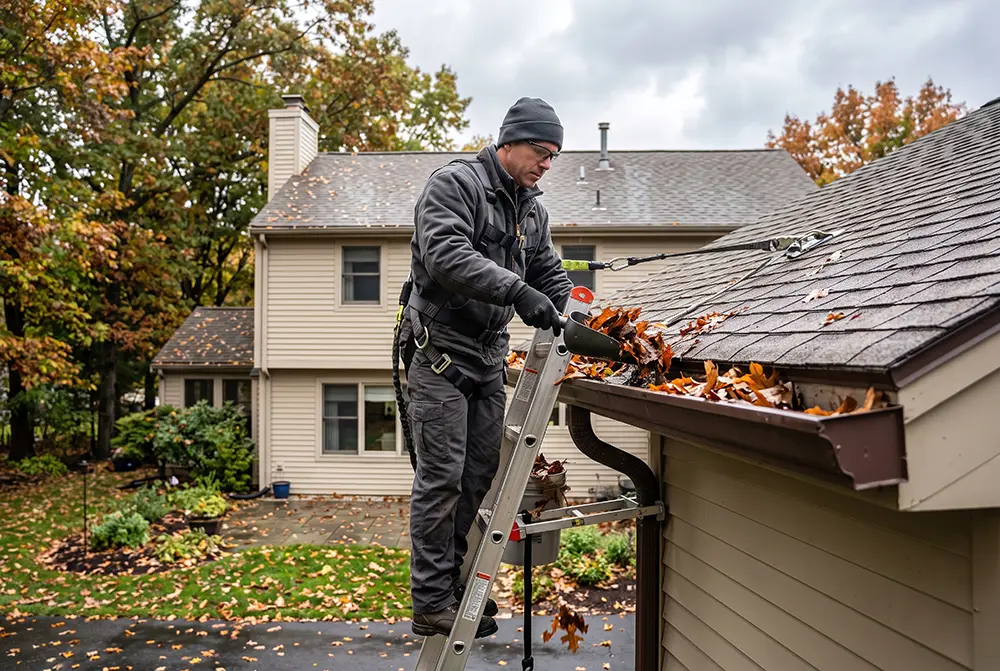
Gutter cleaning sounds simple, but ladder work causes plenty of injuries every year.
If you choose to clean your own gutters:
- Use a stable ladder
- Place it on firm, level ground
- Avoid reaching too far sideways
- Never work during rain or high winds
- Keep three points of contact when climbing
- Have someone nearby when possible
If your home is tall, has steep terrain, or requires access to difficult roof areas, hiring a professional may be the safer option.
There is no roofing maintenance task worth risking a serious fall.
When Should Northeast Ohio Gutters Be Cleaned?
There is no single perfect date.
For many homes, a useful schedule is:
Early Fall: Remove summer debris and early leaf buildup.
Mid to Late Fall: Clean again after the majority of nearby trees have dropped their leaves.
Homes with relatively few trees may need less frequent attention.
Homes surrounded by mature maples, oaks, and other deciduous trees may require additional cleaning.
The goal is simply to keep water moving freely before freezing temperatures arrive.
Gutter Problems Can Sometimes Reveal Roof Problems
Sometimes what appears to be a gutter issue is actually connected to the roof.
For example, you may notice:
- Water consistently dripping behind the gutter
- Staining near the roof edge
- Deteriorated fascia
- Unusual quantities of roofing granules
- Sections of gutter damaged by falling branches
These signs deserve a closer look.
A professional inspection can help determine whether you are dealing with a gutter problem, a roof-edge problem, storm damage, or a combination of several issues.
Add Gutters to Your Fall Roof Maintenance Checklist
Gutter cleaning should not be treated as an isolated chore.
It is part of a larger fall maintenance routine.
Before winter, we recommend homeowners pay attention to:
- Gutters and downspouts
- Missing shingles
- Flashing
- Tree branches
- Roof valleys
- Attic moisture
- Ventilation
- Signs of summer storm damage
The more problems you identify while temperatures are still mild, the more options you generally have for addressing them.
Common Questions About Fall Gutter Cleaning
How often should I clean my gutters in fall?
It depends on how many trees surround your home. Some homeowners may need only one thorough cleaning, while heavily wooded properties may need two or more.
Can clogged gutters damage asphalt shingles?
Clogged gutters do not necessarily damage shingles directly, but poor drainage can allow water to remain around roof edges and other vulnerable components longer than intended.
Should I wait until all the leaves fall?
Usually not. If the gutters are already clogged, waiting several more weeks simply means rainwater cannot drain properly during that period.
Are gutter guards maintenance-free?
No. They may reduce gutter cleaning, but most systems still benefit from periodic inspection and debris removal.
Can Roof Maxx fix gutter problems?
No. Roof Maxx is a roof rejuvenation treatment for qualifying asphalt shingles. Gutter repairs and drainage issues are separate maintenance needs.
Final Thought
Cleaning gutters may not be the most exciting part of fall home maintenance, but it is one of the simplest ways to help your roofing system manage rain and prepare for colder weather.
For homeowners throughout Cleveland, Akron, Canton, and Northeast Ohio, the best approach is to clean gutters before fall leaves completely take over—and then check them again as the season progresses.
If gutter debris, granule buildup, storm damage, or anything else makes you wonder about the condition of your roof, we can help.
We offer a free roof inspection, roof health checkup, and quote so you can understand where your roof stands before winter arrives.
Get a Free Inspection, Roof Health Checkup, and Quote



