What Northeast Ohio Homeowners Should Know Before Assuming the Worst
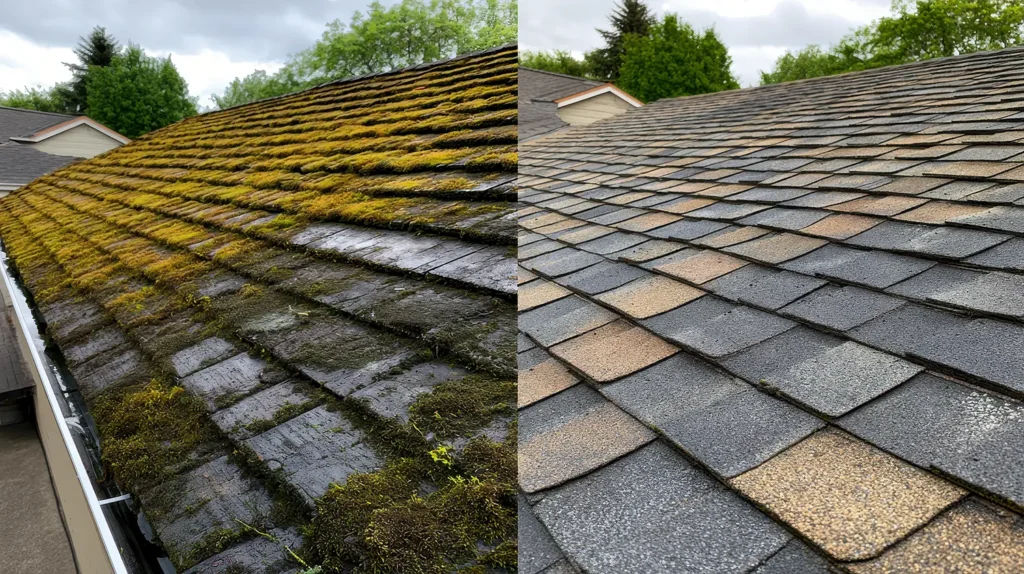
Moss/algae roof damage… you’ve probably seen it while driving through your neighborhood. One roof has dark black streaks running down the shingles. Another has patches of green moss growing near the edges. Maybe you’ve even looked at your own roof and wondered:
“Is my roof failing, or is it just dirty?”
It’s a common question—and the answer depends on what’s actually growing on your roof.
Across Cleveland, Akron, Canton, Medina, Hudson, Mentor, North Canton, Massillon, and surrounding Northeast Ohio communities, our combination of humidity, rainfall, mature trees, and changing seasons creates conditions where algae and moss can thrive.
At Roof Maxx of Cleveland — proudly serving the entire Cleveland, Akron, Canton region — we often help homeowners understand the difference between cosmetic staining and conditions that deserve closer attention.
Not Every Dark Streak Means Your Roof Is Damaged
One of the biggest misconceptions is that black streaks automatically mean a roof needs replacement.
In many cases, those streaks are caused by a type of airborne algae that grows on the surface of shingles.
While algae can affect your home’s appearance, it doesn’t necessarily mean the shingles themselves have reached the end of their life.
That’s why it’s important to identify the cause before assuming the worst.
Moss Is a Different Story
Unlike algae, moss can create more significant concerns over time.
Moss tends to:
- Hold moisture against shingles
- Grow beneath shingle edges
- Slow drying after rain
- Create conditions where roofing materials stay damp longer
This doesn’t mean every patch of moss requires major repairs, but it is something worth monitoring.
Local Tip:
Homes in older Northeast Ohio neighborhoods often have large maple and oak trees that provide wonderful summer shade. Those same trees can also reduce sunlight on your roof, allowing moisture to linger longer after rain and creating ideal conditions for moss and algae growth.
Why Some Roofs Develop More Growth Than Others
Several factors influence whether algae or moss appears.
These include:
Shade
Roofs that receive limited sunlight tend to stay damp longer.
Tree Coverage
Nearby trees increase shade while also dropping leaves, twigs, and organic debris that retain moisture.
Humidity
Northeast Ohio summers often bring warm temperatures combined with high humidity, creating favorable conditions for organic growth.
Drainage
Areas where water drains slowly or debris collects may remain damp longer than the rest of the roof.
Can Moss or Algae Cause Leaks?
Usually, not directly.
However, moss can contribute to conditions that increase the likelihood of problems.
When moisture remains trapped against roofing materials for extended periods, it may accelerate normal aging and expose existing weaknesses.
That’s one reason it’s a good idea to address excessive moss before it becomes widespread.
Should You Pressure Wash Your Roof?
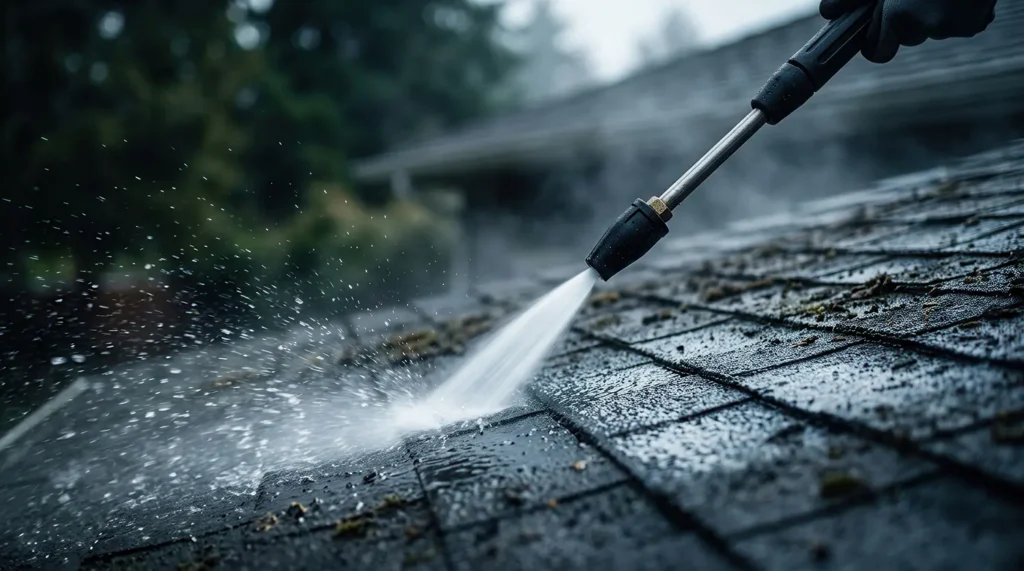
Many homeowners assume pressure washing is the quickest solution.
In most cases, that’s not recommended.
High-pressure water can:
- Remove protective granules
- Damage shingles
- Shorten roof life
- Force water beneath roofing materials
If you’re considering roof cleaning, it’s generally best to use methods appropriate for asphalt shingles and follow manufacturer recommendations.
What About Black Streaks?
Black streaks are often cosmetic.
If your roof is otherwise in good condition, they don’t necessarily indicate structural damage.
However, if the streaks are accompanied by:
- Curling shingles
- Granule loss
- Missing shingles
- Interior leaks
it’s worth scheduling a professional inspection.
When Should You Have Your Roof Evaluated?
Consider scheduling an inspection if:
- Moss continues spreading each year.
- Branches keep the roof heavily shaded.
- Organic debris regularly collects in roof valleys.
- You notice signs of aging in addition to moss or algae.
- You’re simply unsure whether the roof is still in good condition.
A professional inspection can separate cosmetic issues from problems that require attention.
👉 https://roofhubohio.com/get-a-free-quote/
Final Thought
Not every roof with black streaks or patches of moss is in trouble.
But every roof deserves occasional attention.
For homeowners across Cleveland, Akron, Canton, and throughout Northeast Ohio, understanding the difference between cosmetic staining and genuine roofing concerns can help you make informed decisions—and avoid unnecessary worry.



