Understanding Some of the Most Common Roof Leak Locations
When homeowners discover a roof leak, it’s easy to assume the shingles are the problem.
Sometimes they are.
But many leaks actually begin somewhere else—especially around the places where something interrupts the otherwise continuous surface of the roof.
Chimneys, plumbing vents, exhaust vents, skylights, walls, and other roof penetrations require special waterproofing details. These areas rely heavily on flashing to direct water away from vulnerable openings.
When flashing becomes damaged, loose, improperly installed, or simply worn with age, water can find its way into the roofing system.
For homeowners throughout Cleveland, Akron, Canton, Medina, Hudson, Mentor, North Canton, Massillon, and surrounding Northeast Ohio communities, these vulnerable areas deserve particular attention because our roofs regularly contend with heavy rain, snow, ice, strong winds, and repeated freeze-thaw cycles.
Here’s why these leaks happen—and what you should look for.
Why Roof Penetrations Are Vulnerable to Leaks
Think about a simple asphalt shingle roof with no openings.
Water hits the shingles and flows downward toward the gutters.
Now add a chimney.
Suddenly, water has an obstacle in its path.
The roofing system needs a way to direct that water around the chimney without allowing it to enter the home.
That’s the job of flashing.
Similar waterproofing details are needed anywhere the roof meets:
- Chimneys
- Plumbing vent pipes
- Exhaust vents
- Skylights
- Walls
- Dormers
- Valleys
- Other roof penetrations
These transitions create some of the most complex areas of the roofing system—and therefore some of the places where leaks are most likely to develop.
What Is Roof Flashing?
Roof flashing is typically made from thin pieces of metal installed at vulnerable joints and transitions.
Its purpose is simple:
Redirect water away from places where it might otherwise enter the roofing system.
Proper flashing works together with shingles and other roofing materials to create overlapping layers that shed water.
You may find flashing:
- Around chimneys
- Around vent pipes
- Along walls
- In roof valleys
- Around skylights
- Along certain roof edges
When everything is properly installed and maintained, you probably never think about it.
When flashing fails, however, you may quickly discover just how important it is.
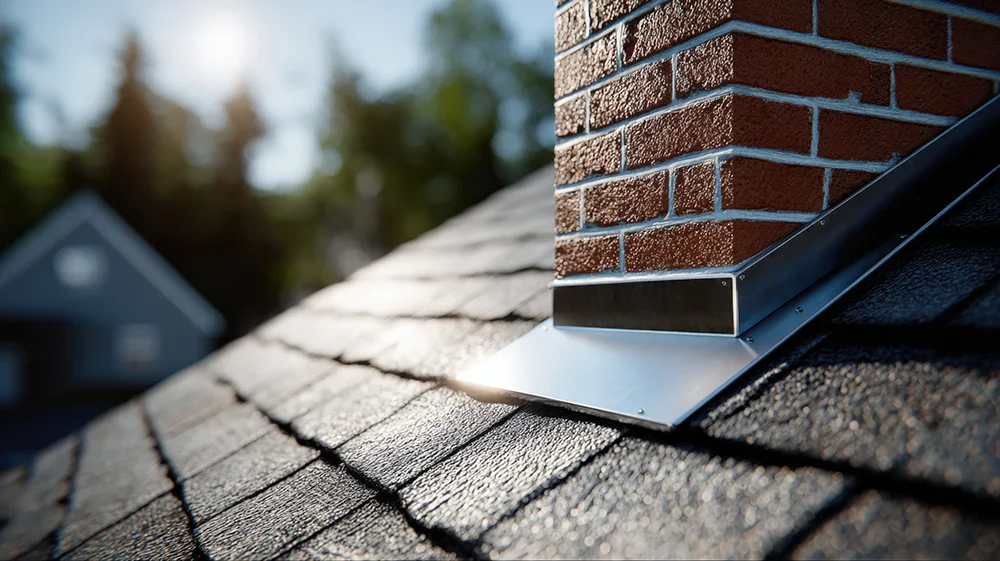
Why Chimneys Are Common Leak Locations
Chimneys create several potential entry points because they pass completely through the roofing system.
Proper chimney flashing typically involves multiple components designed to direct water around the structure.
Problems can develop when:
- Flashing becomes loose
- Sealants deteriorate
- Metal corrodes
- Previous repairs fail
- Roof movement creates small gaps
- Water begins getting behind the flashing
And sometimes what appears to be a chimney leak isn’t actually coming through the roof at all.
Masonry, chimney caps, and other chimney components can also allow moisture into the structure.
That’s why correctly identifying the source matters.
Local Tip: Northeast Ohio’s freeze-thaw cycles can be particularly hard on roof transitions. Water enters a tiny opening, freezes when temperatures fall, expands, and then melts when temperatures rise again. Repeating that cycle over multiple winters can gradually enlarge small weaknesses around flashing and other roof components.
Plumbing Vent Pipes Can Leak Too
Those small pipes extending through your roof aren’t random.
Many are plumbing vents that allow gases and air pressure to escape from the home’s plumbing system.
Because the pipe passes through the roof, the opening needs to be sealed against water.
Typically, a flashing assembly or boot surrounds the pipe.
Over time, the material around that boot may:
- Crack
- Split
- Become brittle
- Pull away from the pipe
- Develop gaps
A tiny opening around a plumbing vent can allow surprising amounts of water into a home during heavy rain.
What About Exhaust Vents?
Bathroom fans, kitchen exhaust systems, and other ventilation equipment may also terminate through the roof.
Like plumbing vents, these openings need properly installed flashing.
Problems may develop if:
- The flashing loosens
- The vent becomes damaged
- Sealants deteriorate
- Nearby shingles become compromised
Because these components are relatively small, problems aren’t always visible from the ground.
Roof-to-Wall Intersections Are Another Trouble Spot
Some homes have roof sections that meet vertical walls.
These intersections require flashing that directs water down the roof rather than allowing it behind siding or roofing materials.
If flashing is missing, damaged, or improperly installed, water can travel behind exterior materials before eventually appearing inside.
That can make the source of the leak surprisingly difficult to locate.
Why Heavy Rain Exposes Flashing Problems
A small flashing issue might remain unnoticed during light rain.
Then a strong Northeast Ohio thunderstorm arrives.
Heavy rain combined with wind can push water into places it wouldn’t normally reach.
That’s why homeowners sometimes say:
“It only leaks when it rains really hard.”
That statement can actually provide a useful clue.
Wind-driven rain may be exposing a weakness around flashing, vents, or another roof transition.
The Interior Leak May Not Be Directly Below the Problem
This is one of the most frustrating things about roof leaks.
Water doesn’t necessarily fall straight down after entering the roofing system.
It can:
- Travel along roof decking
- Follow rafters
- Run along pipes
- Move across framing
- Soak insulation
The ceiling stain you see downstairs may be several feet away from the actual entry point.
That’s why simply patching the roof directly above a stain doesn’t always solve the problem.
What Should You Look for Inside the Home?
Possible signs of moisture intrusion include:
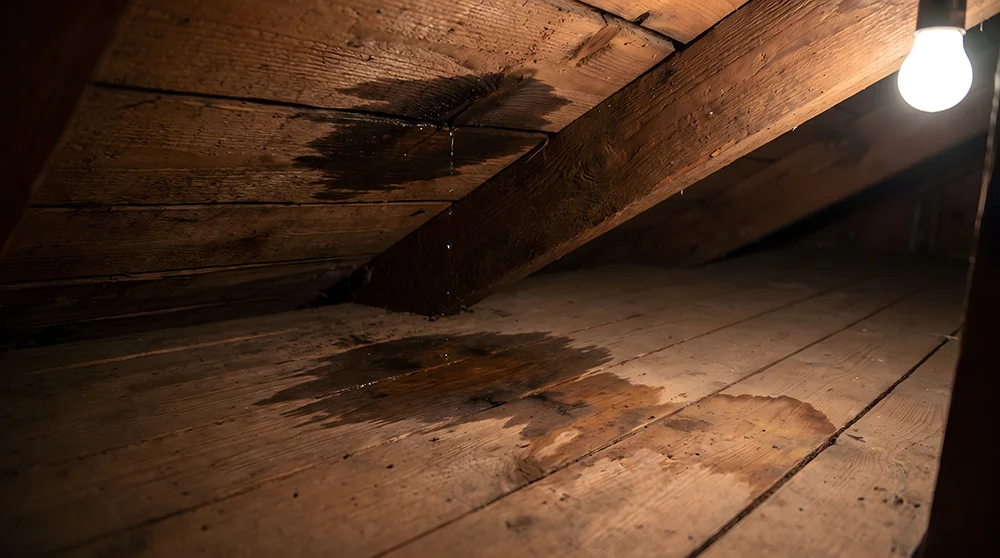
- Yellow or brown ceiling stains
- Peeling paint
- Damp drywall
- Musty odors
- Wet attic insulation
- Darkened roof decking
- Moisture around chimneys
Sometimes these signs appear only after prolonged or particularly heavy rain.
If a stain disappears when the weather dries out, don’t assume the problem has solved itself.
The water source may simply be inactive until the next storm.
Should You Use Caulk to Fix Roof Flashing?
It’s tempting.
You find what appears to be a small gap, grab a tube of caulk, and seal it.
Sometimes sealant is legitimately part of a roofing detail. But simply applying more caulk isn’t necessarily a permanent repair.
If the underlying flashing is damaged or incorrectly installed, covering the area with sealant may temporarily hide the problem without correcting it.
A proper repair should address why water is entering, not simply cover the visible opening.
When Should You Have the Roof Inspected?
Consider scheduling a professional inspection if:
- You see staining near a chimney.
- Leaks appear during heavy rain.
- A plumbing vent boot looks cracked or deteriorated.
- Flashing appears loose or damaged.
- Your roof recently experienced strong winds.
- A previous flashing repair has started leaking again.
- You’re unsure where an interior water stain is coming from.
And remember: you don’t need to climb onto the roof yourself.
Many of these areas are difficult to inspect safely without proper equipment and experience.
Does a Flashing Leak Mean You Need a New Roof?
Usually, no.
A localized flashing problem may require only a localized repair.
However, the overall condition of the roof still matters.
If flashing problems occur alongside:
- Extensive granule loss
- Curling shingles
- Widespread cracking
- Multiple previous repairs
- Repeated leaks
- Missing shingles
then it may make sense to evaluate the roofing system more broadly.
That’s where a professional inspection becomes valuable.
The question shouldn’t simply be:
“Where is the leak?”
It should also be:
“What is the overall condition of this roof, and what solution makes sense?”
Common Questions About Roof Flashing and Leaks
Can chimney flashing be repaired without replacing the roof?
Often, yes. If the surrounding roofing system remains in good condition, flashing problems can frequently be addressed as localized repairs.
Why does my chimney leak only during heavy rain?
Wind-driven rain or large volumes of water may expose small weaknesses that aren’t noticeable during lighter rainfall. The problem could involve flashing, masonry, the chimney cap, or another nearby component.
How long does roof flashing last?
There’s no universal lifespan. Flashing longevity depends on its material, installation, weather exposure, roof movement, maintenance, and surrounding roofing components.
Can a vent pipe really cause a significant roof leak?
Yes. A relatively small opening around a deteriorated vent boot can allow substantial water intrusion during prolonged or wind-driven rain.
Should flashing be inspected even if the roof isn’t leaking?
Yes. Identifying deteriorating flashing before water enters the home can help prevent interior damage.
Final Thought
Shingles receive most of the attention when homeowners think about roofing, but some of the most important parts of your roof are the small details between them.
Chimneys, vents, walls, and other penetrations create natural vulnerabilities that depend on properly functioning flashing to keep water outside.
For homeowners across Cleveland, Akron, Canton, and throughout Northeast Ohio, paying attention to these areas can help catch a potential roof leak before it becomes a much larger problem.
If you’ve noticed signs of moisture or simply aren’t sure about the condition of your roof, Roof Maxx of Cleveland offers a free roof inspection and free quote to help you better understand your options.



