
What Northeast Ohio Homeowners Should Know After Wind, Hail or Severe Weather
A strong thunderstorm moves through Northeast Ohio overnight.
The next morning, you find shingles in the yard. A tree limb came down near the house. Maybe you notice a new water stain on the ceiling a few days later.
Once you’ve determined everyone is safe, one of the first questions you’re likely to ask is:
“Will homeowners insurance cover this?”
Often, homeowners insurance provides coverage for sudden roof damage caused by events such as wind, hail, or falling objects. But that doesn’t mean every damaged roof—or every storm-related claim—is automatically covered.
The details matter.
For homeowners throughout Cleveland, Akron, Canton, Medina, Hudson, Mentor, North Canton, Massillon, and surrounding Northeast Ohio communities, understanding the basics before the next severe storm can make an already stressful situation easier to navigate.
The Cause of the Roof Damage Matters
Insurance coverage generally depends less on the simple fact that your roof is damaged and more on why it was damaged.
Standard homeowners policies commonly cover sudden and accidental damage caused by specified events, which may include:
- Wind
- Hail
- Falling objects or tree limbs
- Lightning
- Weight of ice or snow
The exact coverage depends on your individual policy.
That’s very different from a roof that has simply deteriorated over many years.
Storm Damage vs. Normal Wear and Tear
This distinction is especially important.
Imagine two Northeast Ohio homes with missing shingles.
Home A
A severe thunderstorm produces damaging winds overnight, and several previously intact shingles are torn from the roof.
Home B
The shingles have been deteriorating for years. They’re brittle, curling, and losing granules, and several eventually come loose.
The roofs may look similar afterward.
But the cause of the damage isn’t necessarily the same.
Insurance is generally intended to protect against covered losses rather than pay for ordinary deterioration or deferred maintenance. The age and condition of a roof can also influence how an insurer evaluates coverage and calculates payment.
Local Tip: After a major Northeast Ohio storm, don’t immediately clean up everything you find around the house. If it’s safe, photograph fallen branches, shingles, damaged gutters, siding, and other debris first. Those photographs can help document what the property looked like immediately after the storm.
What About Wind Damage?
Wind is one of the most common concerns after Northeast Ohio thunderstorms.
Strong winds can:
- Tear shingles away
- Lift or crease shingles
- Damage ridge caps
- Loosen flashing
- Send branches and debris into the roof
Standard homeowners insurance generally includes wind-related damage, although the specific terms and deductible depend on the policy.
If your neighborhood experienced high winds and you find roofing materials in your yard afterward, don’t assume everything else is fine simply because you can’t see the damaged area from the ground.
What About Hail Damage?
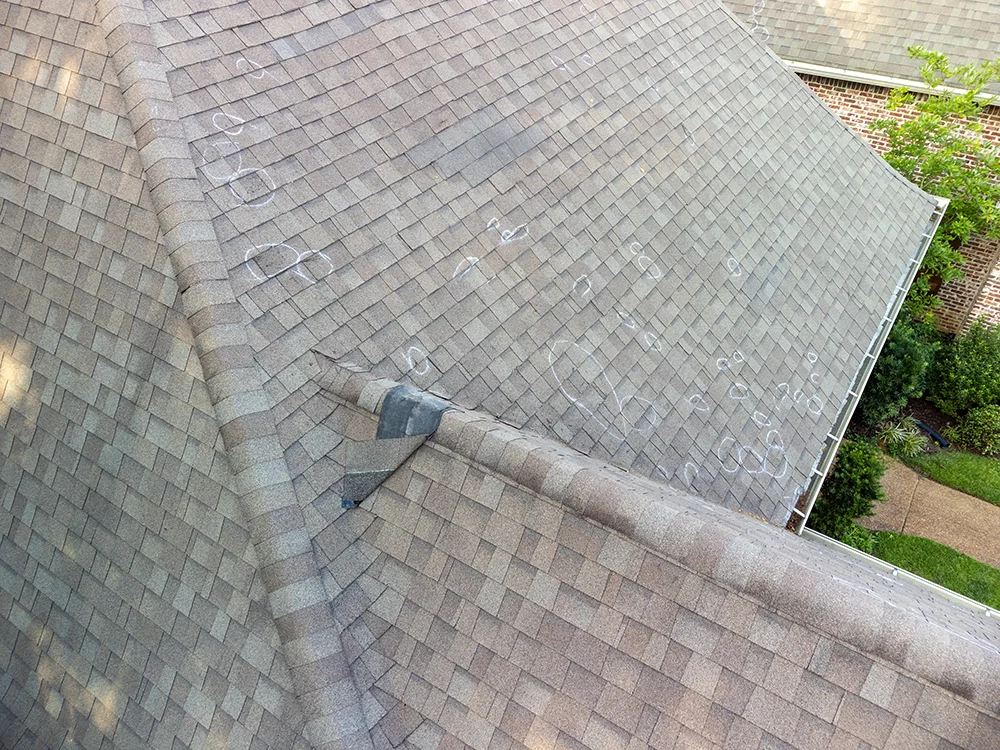
Hail can be particularly frustrating because the damage isn’t always obvious.
Large hail may leave visible marks, but other impacts can damage or dislodge protective granules without creating an obvious hole.
That’s why homeowners sometimes don’t realize their roof was affected until much later.
If hail moved through your neighborhood, a professional inspection can help determine whether the roof shows evidence of impact damage.
What About a Tree Falling on the Roof?
Falling trees and branches can cause everything from a few damaged shingles to major structural damage.
Homeowners policies commonly provide coverage when a covered event such as a storm causes a tree or limb to damage the insured home, subject to the terms and limitations of the policy.
If a tree has damaged your home, prioritize safety first.
Stay away from unstable trees, damaged electrical lines, and compromised portions of the structure.
Your Deductible Matters
Even when damage is covered, your deductible affects what you pay out of pocket.
Some homeowners policies use a standard dollar deductible, while others may have different provisions for wind or hail. Percentage-based wind/hail deductibles are used in some markets, including parts of the Midwest.
That’s why it’s worth reviewing your policy before storm season rather than trying to understand it while dealing with damage.
Questions worth asking your insurance professional include:
- What is my deductible?
- Is there a separate wind or hail deductible?
- Is my roof covered at replacement cost or actual cash value?
- Are there special provisions based on roof age?
- What documentation would be needed after a loss?
Replacement Cost vs. Actual Cash Value
This is another term homeowners may encounter.
Depending on the policy, roof coverage may be based on replacement cost value (RCV) or actual cash value (ACV).
Actual cash value generally accounts for depreciation, while replacement cost coverage generally focuses on the cost of replacing covered damaged property subject to the policy’s terms.
Roof age and condition can play an important role here. Some insurers provide different coverage for older roofs.
If you’re unsure which type of coverage you have, your insurance agent or carrier can explain your specific policy.
Should You Have the Roof Inspected Before Filing a Claim?
If you suspect storm damage, documenting the condition of the roof can be valuable.
A professional roof inspection can help identify:
- Missing shingles
- Wind-lifted shingles
- Hail impacts
- Damaged flashing
- Fallen-debris damage
- Potential water intrusion
However, a roofing professional doesn’t determine whether your insurance policy covers the damage.
That decision belongs to your insurance company under the terms of your policy.
Keeping those roles separate helps homeowners understand what each professional is there to do.
What Should You Do After a Storm?
If you think your roof may have been damaged:
- Prioritize safety. Don’t climb onto a wet or damaged roof.
- Document visible damage. Take photos and video from safe locations.
- Prevent additional damage when reasonably possible and safe.
- Review your homeowners policy.
- Contact your insurer or insurance professional for claim instructions.
- Have the roof professionally evaluated.
Insurance industry guidance likewise recommends documenting damage safely and contacting the insurer or agent when filing a claim.
Don’t Assume a Storm Means You Need a New Roof
Finding storm damage doesn’t automatically mean the entire roof needs replacement.
Depending on the extent of the damage and the overall condition of the roofing system, the appropriate solution could involve:
- A localized repair
- Replacing several shingles
- Repairing flashing
- More extensive restoration
- Full replacement
If the roof remains structurally sound but its asphalt shingles are showing age-related loss of flexibility, it may also be worth determining whether roof rejuvenation is appropriate after necessary storm repairs have been addressed.
Common Questions About Insurance and Roof Damage
Will insurance replace my entire roof if only part is damaged?
Not necessarily. The insurer determines the covered scope based on the damage, policy language, applicable requirements, and other factors.
Does homeowners insurance cover an old roof?
Potentially, but age and condition can affect both eligibility and how a covered loss is paid. Some insurers treat older roofs differently or use actual cash value rather than replacement cost coverage.
Does homeowners insurance cover a leaking roof?
It depends on why the roof leaked. A sudden leak resulting from a covered storm event may be treated differently from leakage caused by long-term deterioration or inadequate maintenance.
Should I wait until I see a leak before having storm damage inspected?
No. Wind and hail damage can exist without an immediate interior leak.
Final Thought
So, does homeowners insurance cover roof storm damage?
It often can when the damage results from a covered event such as wind, hail, or falling debris—but there isn’t a universal answer. Your policy, deductible, roof condition, cause of loss, and insurer’s evaluation all matter.
For homeowners across Cleveland, Akron, Canton, and throughout Northeast Ohio, the best approach after severe weather is to stay safe, document what happened, understand your insurance coverage, and have suspected roof damage properly evaluated.
If you’d like Roof Maxx of Cleveland to take a closer look at your roof, you can schedule a free roof inspection and quote.



