Every winter across Cleveland, Akron, Canton, Medina, Hudson, Mentor, North Canton, Massillon, and surrounding Northeast Ohio communities, homeowners deal with the same frustrating problem:
Ice dams forming along their roof edges.
But ice dams themselves are often not the real problem.
More often than not, the underlying issue is poor attic ventilation and heat buildup inside the home.
At Roof Maxx of Cleveland, serving the entire Cleveland – Akron – Canton region, attic ventilation is something we frequently evaluate during roof inspections. Proper ventilation can significantly reduce the risk of winter roof damage.
Here’s how it works.
Ice dams form when different parts of the roof are different temperatures.
Here’s the typical process:
- Heat escapes into the attic.
- The roof surface warms in some areas.
- Snow melts on the warmer sections.
- Meltwater flows down toward colder roof edges.
- The water refreezes at the eaves.
- More melting snow backs up behind the frozen ridge.
Eventually, water can work its way under shingles and into the home.
For a full breakdown of ice dam damage, see:
Why Attic Ventilation Matters
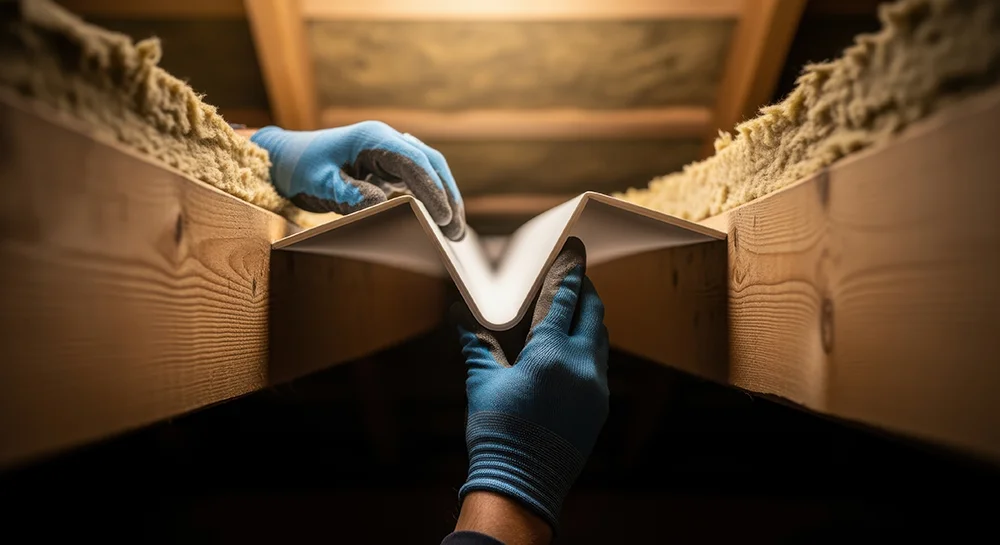
A properly ventilated attic keeps the roof temperature consistent from top to bottom.
Ventilation allows cold outside air to flow through the attic space, preventing heat buildup beneath the roof deck.
Good ventilation helps:
- Reduce snow melt on the roof surface
- Prevent ice dam formation
- Extend the life of asphalt shingles
- Reduce moisture buildup in the attic
- Improve energy efficiency
Without proper ventilation, heat becomes trapped and causes uneven snow melt.
Signs Your Attic Ventilation May Be Poor
Homeowners across Northeast Ohio may notice signs such as:
- Large icicles along gutters
- Ice dams forming repeatedly each winter
- Uneven snow melt patterns
- High attic humidity
- Premature shingle aging
If you’re seeing signs of roof wear after winter, review our article on:
You can also check our:
👉 Spring Roof Inspection Checklist
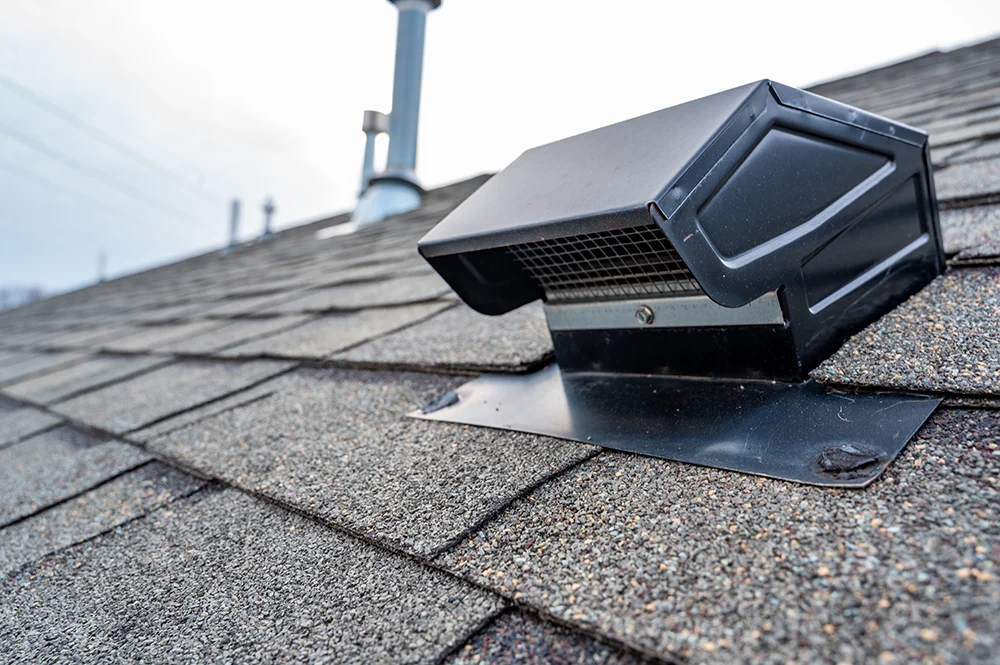
The Role of Soffit and Ridge Vents
Most homes rely on a combination of:
Soffit Vents
Located along the underside of the roof edge. These allow cool air to enter the attic.
Ridge Vents
Installed along the peak of the roof. These allow warm air to escape.
When working together, they create continuous airflow through the attic.
Why This Matters for Shingle Longevity
When attic heat constantly warms the roof deck, shingles expand and contract more frequently.
Over time, this contributes to:
- Curling
- Granule loss
- Brittle shingles
Roof Maxx treatments are designed to restore flexibility to qualifying asphalt shingles using plant-based oils. Restoring flexibility helps shingles handle Northeast Ohio’s extreme seasonal temperature swings.
For qualifying roofs, treatments are backed by a 15-Year Transferable Warranty, as highlighted on the Roof Maxx of Cleveland home page.
When to Schedule a Roof Inspection
If your home experiences repeated ice dams or uneven snow melt patterns, it’s worth having your roof and attic evaluated.
You can schedule a free roof inspection in Northeast Ohio here:
👉 https://roofhubohio.com/get-a-free-quote/
A professional inspection can identify whether your roof needs:
- Ventilation improvements
- Minor repairs
- Preventative maintenance
- Roof rejuvenation
- Or replacement
A Preventative Approach Saves Money
Many homeowners only think about their roof after a leak appears.
But proactive inspections — especially after winter — can prevent small issues from becoming major repairs.
Across Cleveland, Akron, Canton, and surrounding Northeast Ohio communities, spring is the ideal time to evaluate your roof and attic ventilation.